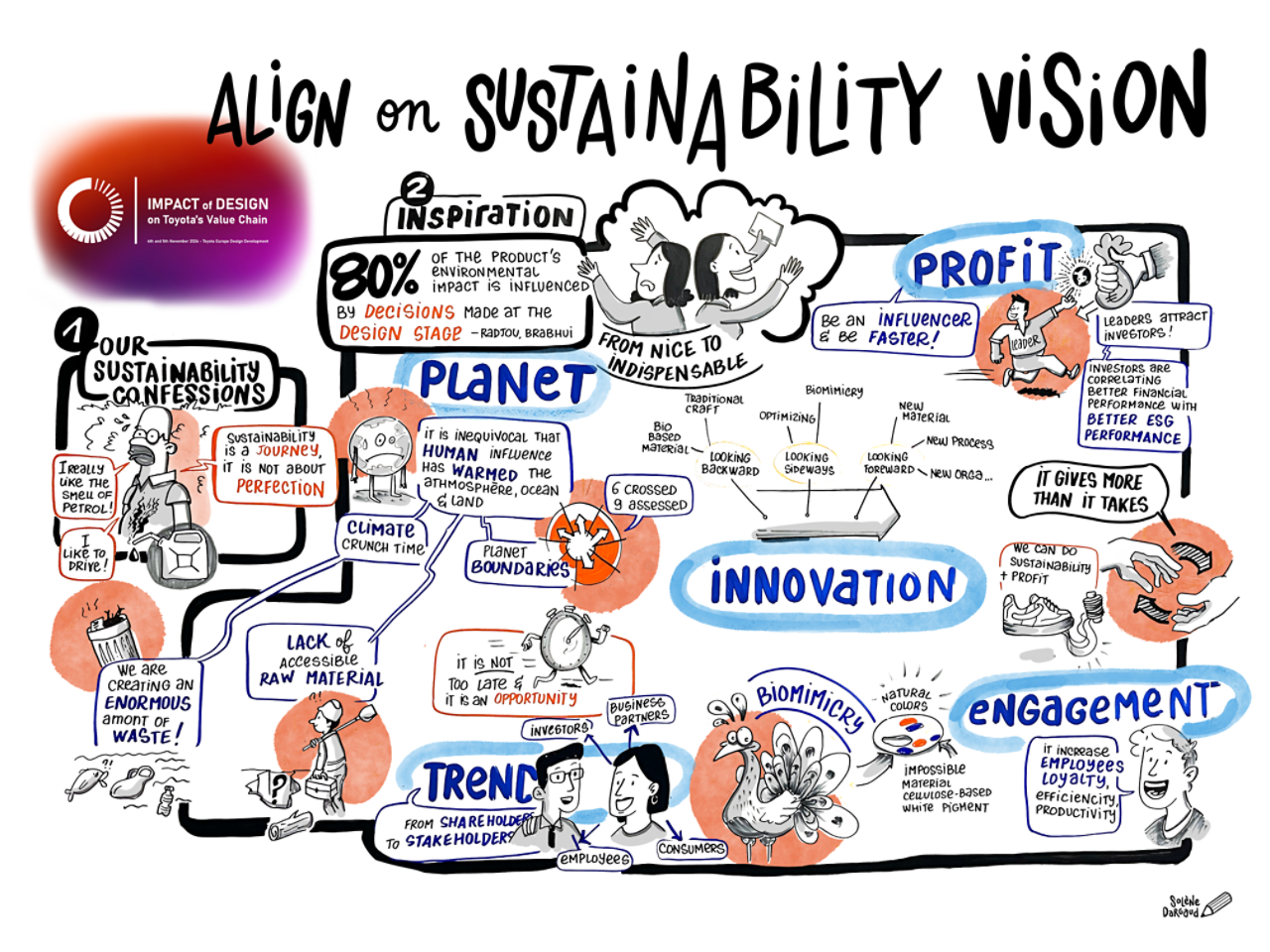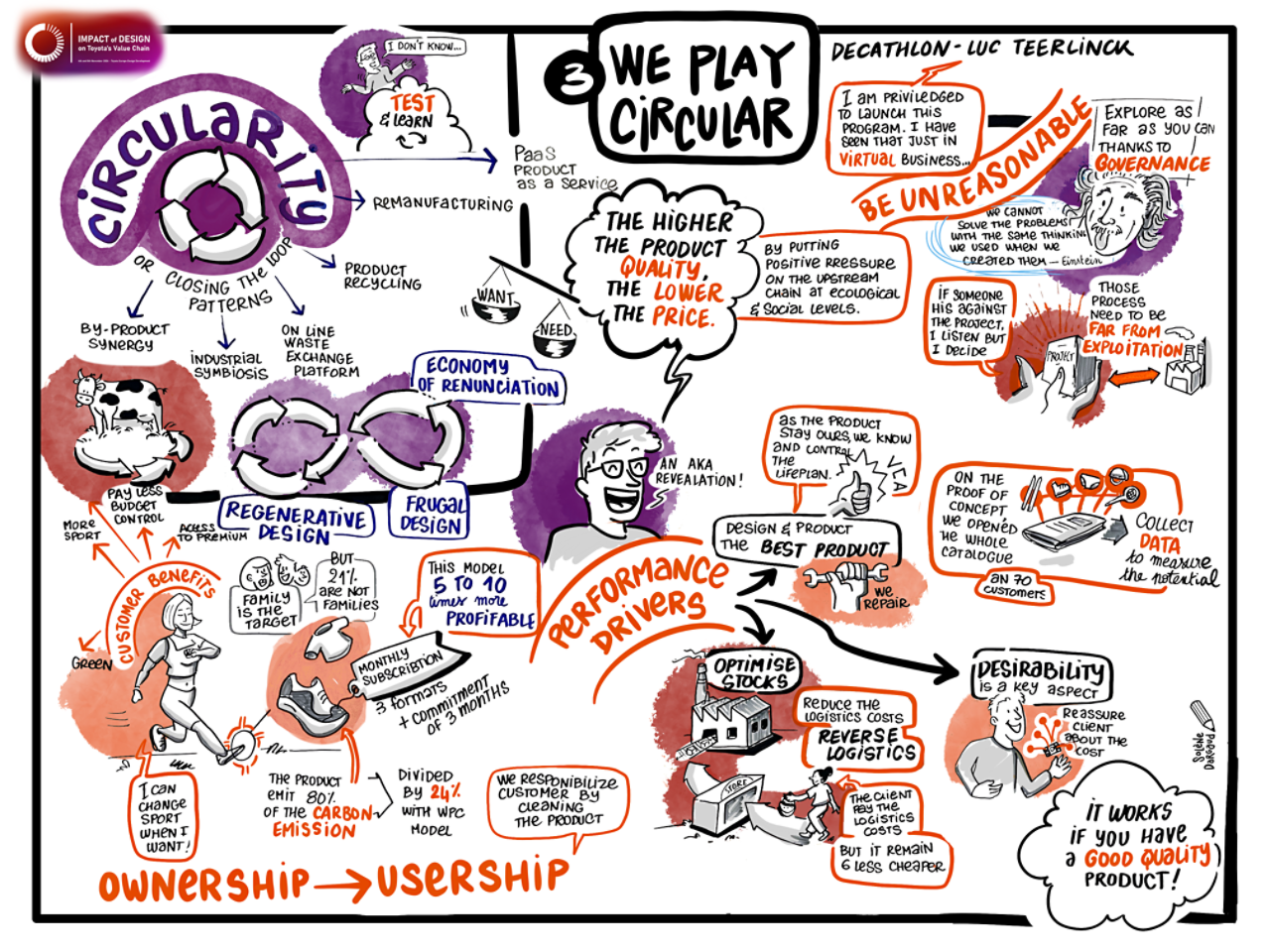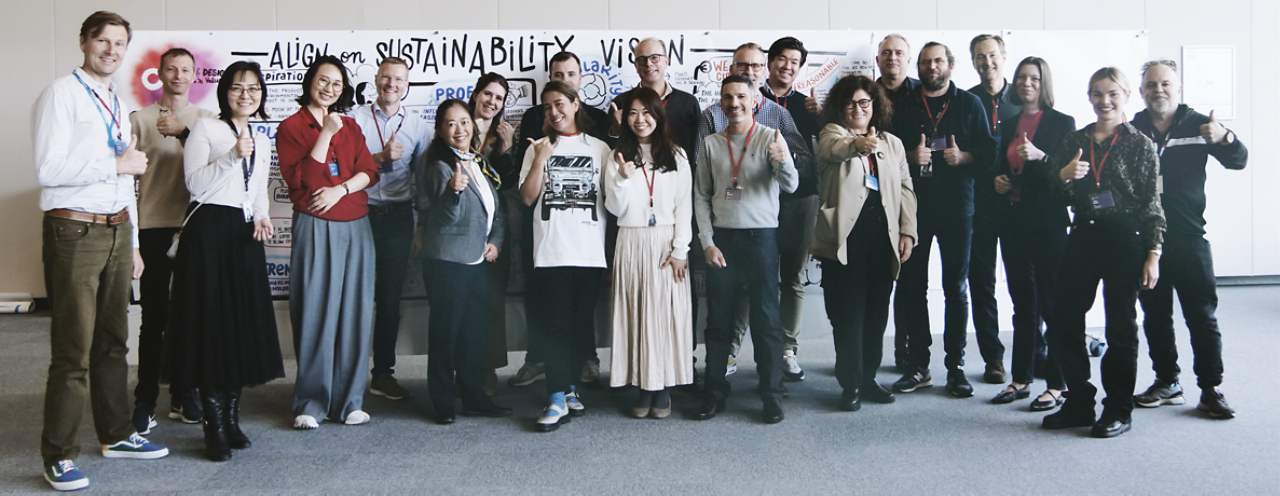

On November 3rd and 4th, 2024, we held a cross-departmental workshop titled “The Impact of Design on Toyota’s Value Chain” with Toyota’s European stakeholders. The goal was to exchange information and build consensus on collaborative next steps.
Gaetan COLIBERT, our Sustainability Leader at Toyota ED², spearheaded the workshop, supported by the Strategy and Mobility team. Together, we designed a participative and interactive format. ED² has been actively addressing these topics through initiatives like Allinclusive, vehicle life cycle management projects, and the Africa project focused on MaaS leapfrogging eco-systems. During the workshop, we began sharing the progress we’ve made.
As the Communication and PR lead at ED², I recognized significant gaps in how Toyota and Lexus’ sustainability efforts are communicated externally. Despite Toyota’s longstanding leadership in green innovation and sustainability, much of our internal progress remains under-publicized. For example, when Toyota launched the bZ4X in Europe, I was surprised to see accusations of “greenwashing,” especially given our pioneering history in sustainable mobility. This reflects a stark contrast between regional perceptions—Europe being particularly sensitive to such issues. To address this, we need to focus on concrete examples that showcase what we do and how we do it, avoiding any potential for greenwashing claims.
Design, by its nature, is tasked with visualizing and creating tangible solutions that resonate with customers. This positions us to take the lead in achieving carbon neutrality by 2040 in Europe—ten years ahead of the global target.
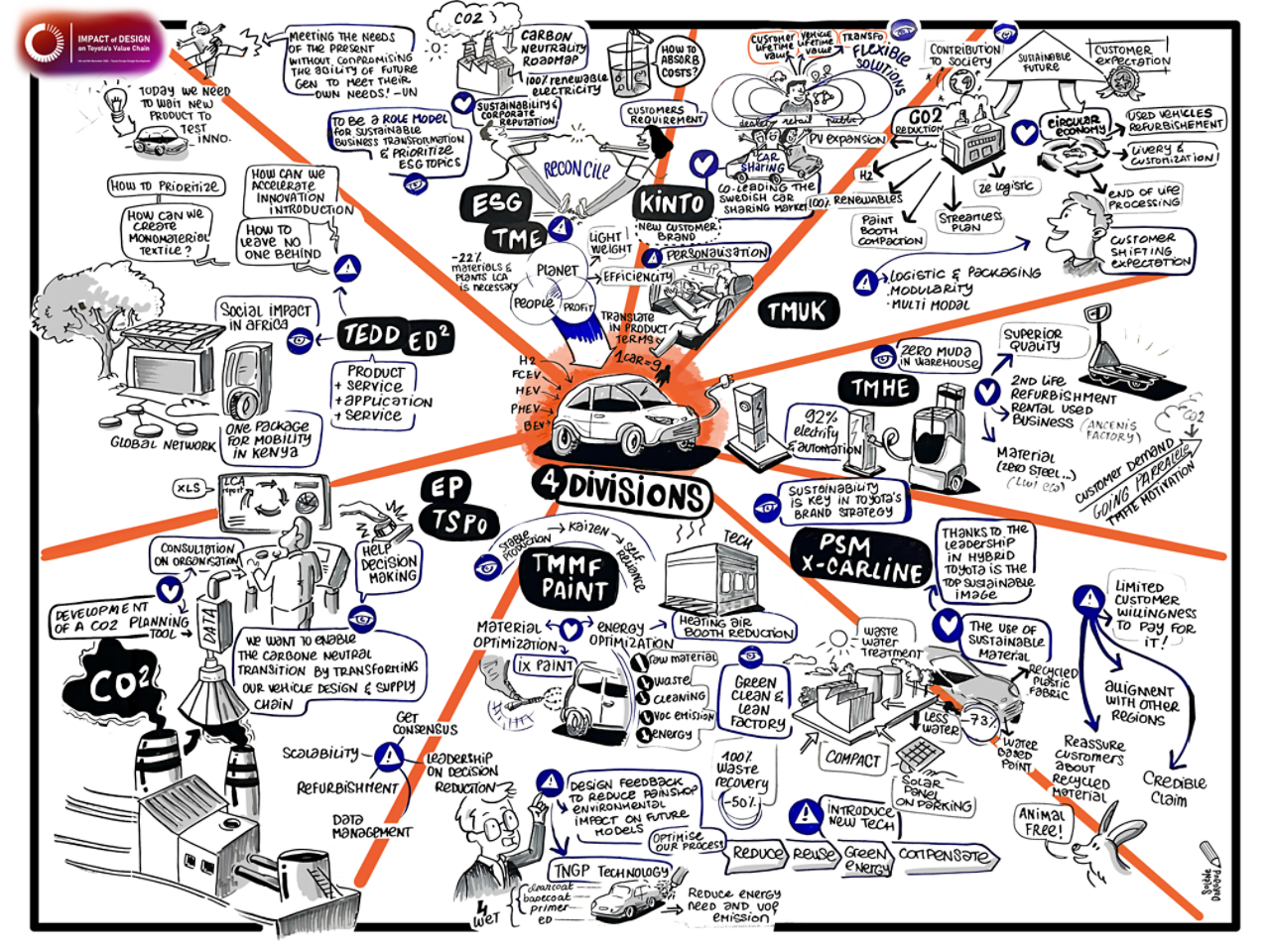
To ensure the right stakeholders were involved, we leveraged our network as Toyota and Lexus’ satellite design studio. Participants included leaders from TMHE Design, TMUK, Kinto Europe, TME Product Planning, Cross-Carline teams, LCA teams at TME, and TME Styling, along with observers from TMC. Together, we shared the 2040 roadmap, identified potential roadblocks for each entity and find out how we can collaborate to create motivative manifestos.
While many sustainability activities are underway, the workshop highlighted the lack of consistent information sharing across stakeholders. Our approach was to frame this challenge as an opportunity for growth, rather than a high hurdle or burden. Although the challenges are significant, there is still time to enact meaningful change if we work together.
The outcomes of the workshop were extraordinary. Both the ED² CMF team and TME Styling CMF team are advancing recyclable materials and mono-materials that eliminate the need for paint, making recycling easier. However, achieving these goals requires balancing sustainability with cost pressures and overcoming regional climate target differences. Additionally, when ED² receives design briefs for future products, sustainability and circular economy principles are often absent. This underscores the need for a global consensus on sustainability, making it all the more valuable to have TMC observers participate in these discussions. Sustainability is not just a regional challenge—it’s a global issue requiring collective action.
Following the workshop, we’ve already begun sharing critical information. For instance, TME’s dedicated LCA team has provided insights through online meetings with over 80 participants. These sessions will continue as we work to align efforts across teams.
We are now developing a manifesto based on the workshop outcomes and will share updates in future articles focused on sustainability.
2024年11月3日・4日の二日間、ED²はトヨタの欧州関係者と「トヨタのバリューチェーンにおけるデザイン・インパクト」と題する部門横断ワークショップを開催しました。 その目的は、情報交換を行い、今後の協力プロセスについてコンセンサスを得ることでした。
トヨタED²のサステナビリティ・リーダーであるガエタン・コリベールがワークショップを主導し、戦略&モビリティチーム・チーフデザイナーのローラン・ブジッジュが全体の方向性を指揮しています。ED²は、車両ライフサイクル・マネジメント・プロジェクト「Allinclusive」や、飛躍的なMaaSエコシステムに焦点を当てたアフリカ・プロジェクトなどを通じて、前述の課題に積極的に取り組んできました。ED²が率先する同ワークショップでは、これらのプロジェクトの概要をシェアすることから始めました。
私はED²のコミュニケーション&PR担当として、トヨタとレクサスの持続可能性への取り組みに関する情報伝播が、競合に比べて大きく劣ると考えていました。トヨタはグリーン・イノベーションと持続可能性において、ハイブリッド導入など長年にわたるリーダーシップにもかかわらず、社内の進歩の多くは戦略的に社外へ公表されていません。また公表しても、他社のように上手くブランド化して集中的な広報活動をタイムリーに行うことが少ないように思います。例えば、トヨタの欧州初のBEVであるbZ4Xの発売に対し「グリーンウォッシュ」という非難が起こり、他地域との温度差に驚きました(Beyond ZEROのZEROが、グリーンウォッシュ批判を刺激したようです)。持続可能なモビリティの先駆者であるトヨタの歴史を考えると心外な批判ですが、欧州が特にこの種の問題に敏感だという、認識の地域差の反映です。 グリーンウォッシング非難を避けつつ、トヨタのサーキュラーエコノミーへの努力を効率的に上手くアピールするには、私たちの取り組みを具体的な事例で説明する必要があると考えます。
デザインはその性質上、顧客の心に響く具体的な解決策を視覚化し、創造することを得意とします。これを生かした具体的な活動や、素材や構造が変革している事実を提示すべきでしょう。これにより、2040年までに欧州でカーボンニュートラルを達成するという、世界目標よりも10年早い目標達成が可能となるのです。
私たちはトヨタとレクサスのサテライト・デザインスタジオとしてのネットワークを活用し、TMHEデザイン、TMUK、Kintoヨーロッパ、TME商品企画、TMEクロスカーラインチーム、TMEのLCA(ライフサイクルアセスメント)チーム、TMEスタイリングの各リーダー、そしてTMCからのオブザーバーの参加を実現しました。これらの参加者が2040年ロードマップを共有し、各事業体の潜在的な障害事項を特定し、意欲的なマニフェスト作成に向けた協力の可能性を検討しました。
同ワークショップでは、持続可能性への多くの取り組みが進行している一方で、ステークホルダー間の一貫した情報共有の欠如が浮き彫りになりました。しかし私たちはこれを障害ではなく成長の機会としてとらえ、関係各部署の協力により、この大きな課題は充分に解決可能だと認識しています。
このワークショップは予想以上の反響でした。 ED²のCMFチームとTMEスタイリングのCMFチームは、リサイクル可能な素材や塗料が不要なモノマテリアルの開発を進めています。これらの目標達成には、持続可能性とそのコストとのバランス、グローバル視点に加え地域差への考慮も必要です。また、ED²が受け取る将来製品の設計概要では、持続可能性と循環経済の原則には全く触れておらず、これらの課題に関する世界的コンセンサスが必要なのは明らかです。その点で、TMCのオブザーバーの参加はとても有意義だったと考えます。 サステイナビリティは単に地域的な課題ではなく、集団行動を必要とする世界的な問題です。デザインの方向性を日本から受けプロジェクト化するサテライトスタジオのED²にとって、日本側の意識変化はとても重要です。
ワークショップ後、重要情報の共有が始まりました。 例えばTMEのLCA専門チームは、80人以上が参加するオンライン・ミーティングで現状説明を行いました。同様のセッションが、チーム間の連携を図りながら継続される予定です。
現在、ワークショップの成果に基づきマニフェストを作成中です。その最新情報は、持続可能性に関する今後の記事で共有する予定です。また、今後もステアリングコミッティを作り、定期的な情報交換によりマニフェストの完成と今後の可能性について議論を続ける予定です。