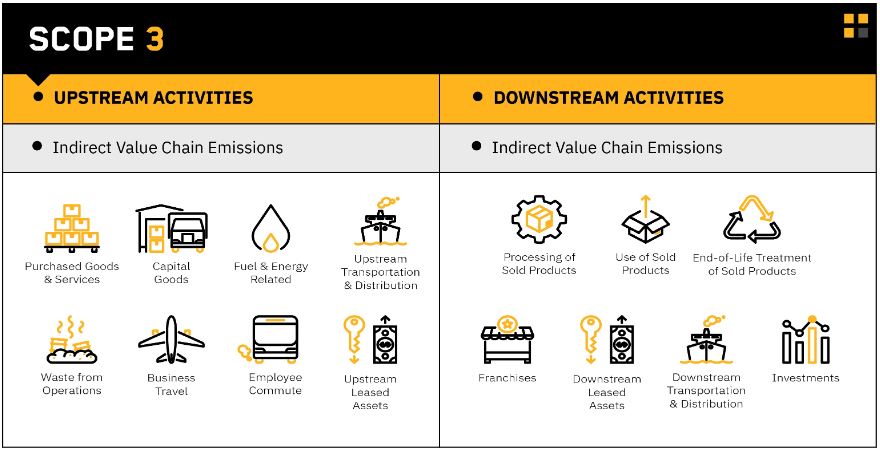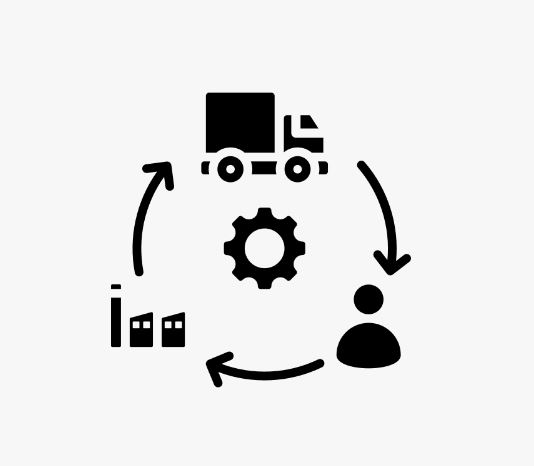

Sustainability is becoming a value chain issue, and various EU regulations accelerate it, for example the European Battery regulation[1]. Also, the Corporate Sustainability Reporting Directive (CSRD) extends its reach beyond a company’s immediate operations to the entire value chain. It[2] mandates companies to disclose information not just about their own activities but also about their upstream and downstream value chain, including their products, services, and business relationships.
The automotive industry has a substantial part in the Scope Three downstream[3]. Scope 3 emissions are considered the most difficult to manage, as it often involves an extensive process of collecting data and engaging with suppliers and customers across the value chain. It requires, for example, reliable CO2 figures for producing a car with thousands of parts.
That is why automotive-related companies and institutes (mainly German) are involving in the EU-funded Catena-X Automotive Network (Berlin), which is the first open and interoperable data ecosystem along the automotive value chain. Its 179 members (as of April 2024) include BMW, Mercedes Benz, Volkswagen, Volvo, Ford, Renault, Bosch, Denso, Microsoft as well as Fraunhofer research Institut.
“You need a digital infrastructure where you can rely on the figures being aggregated. It won't make sense if everybody does their own calculation. The figures used for sustainability reports must be calculated on the same basis. We have published a first set of standards and references for how you define the figures going into the system. … The technical data transfer, including securing data protection, is crucial as well. … Ideally, everybody in the value chain will be able to rely on a supplier’s data verified according to the same standards. … The way we can really make a difference is in comparing one supplier to another.” (Thomas Becker, VP Sustainability and Mobility Strategy for the BMW Group)
Sources & References:
BMW: Cars Must Be Green Across The Entire Supply Chain, Forbes, 29 Jan. 2023
Decoding CSRD: A Deep Dive into the Value Chain Requirements, Greenomy, 5 April 2024
https://www.greenomy.io/blog/decoding-csrd-a-deep-dive-into-the-value-chain-requirements
Directive (EU) 2022/2464 of the European Parliament and of the Council of 14 December 2022
https://eur-lex.europa.eu/legal-content/EN/TXT/?uri=CELEX%3A32022L2464
Catena-X Automotive Network and its members
https://catena-x.net/en/
https://catena-x.net/fileadmin/user_upload/Vereinsdokumente/Catena-X_List_of_Members.pdf
[1] UNDERSTANDING THE NEW EU BATTERY REGULATION, TÜV Süd, 18 Oct. 2023
https://www.tuvsud.com/en-us/resource-centre/blogs/mobility-and-automotive/understanding-the-new-eu-battery-regulation#:~:text=Removability%20and%20Replaceability%3A%20The%20regulation,enforced%20from%20February%2018%2C%202027.
[2] Articles 19(a)(3) and 29(a)(3) of the CSRD
[3] The Greenhouse Gas (GHG) Protocol categorizes scope 3 (value chain) emissions into two main groups: upstream and downstream emissions. Downstream emissions, in seven categories defined by the GHG, are related to customers, from selling goods and services to their distribution, use, and end-of-life stages.
https://www.persefoni.com/blog/upstream-vs-downstream
About the GHG Protocol: https://www.persefoni.com/blog/ghg-protocol
サステイナビリティの焦点はバリューチェーンへと移行し、欧州バッテリー規則[1]など、様々なEU規制がそれを加速させている。企業持続可能性報告指令(CSRD)では報告範囲がバリューチェーン全体に拡大され、企業には自社の事業活動だけでなく、製品、サービス、取引関係を含む上流・下流のバリューチェーン情報の開示が義務付けられる[2]。
自動車産業は、スコープ3の下流側[3]で大きな役割を担っている。スコープ3の排出量は、バリューチェーン全体でデータを収集し、サプライヤーや顧客を巻き込むという大規模なプロセスを伴うため、最も管理し難いとされている。例えば、何千もの部品からなる自動車生産において、信頼し得るCO2値が必要だ。
主にドイツの自動車関連企業や研究機関がEU出資のCatena-X Automotive Network (ベルリン) に参加しているのも、そのためだ。これは初のオープンかつ相互運用可能なバリューチェーン・データエコシステムで、BMW、メルセデス・ベンツ、フォルクスワーゲン、ボルボ、フォード、ルノー、ボッシュ、デンソー、マイクロソフト、フラウンホーファー研究所などを含む179の企業や機関 (今年4月現在) で構成されている。
「信頼し得る集計値を算出するためのデジタルインフラが必要だ。誰もが独自で計算していては意味がない。サステナビリティ報告書に使う数値は、同じベースで算出されなければならない。まず我々(Catena-Xメンバー) は、システムに取り込む数値の最初の定義基準と参考資料を公表した。データ保護の確保を含め、技術データ転送の問題も極めて重要だ。バリューチェーン内の全員が、同一基準に則って検証した、信頼し得るサプライヤーデータを共有できることが理想だ。また、サプライヤーの比較にも本当の違いを生み出すことが出来る。」(BMWグループ、サステナビリティ&モビリティ戦略担当副社長、トーマス・ベッカー氏)
Sources & References:
BMW: Cars Must Be Green Across The Entire Supply Chain, Forbes, 29 Jan. 2023
Decoding CSRD: A Deep Dive into the Value Chain Requirements, Greenomy, 5 April 2024
https://www.greenomy.io/blog/decoding-csrd-a-deep-dive-into-the-value-chain-requirements
Directive (EU) 2022/2464 of the European Parliament and of the Council of 14 December 2022
https://eur-lex.europa.eu/legal-content/EN/TXT/?uri=CELEX%3A32022L2464
Catena-X Automotive Network and its members
https://catena-x.net/fileadmin/user_upload/Vereinsdokumente/Catena-X_List_of_Members.
[1] 欧州バッテリー規則とは TÜV Süd, 18 Oct. 2023
https://www.tuvsud.com/ja-jp/industries/energy/eu-battery-regulation
[2] Articles 19(a)(3) and 29(a)(3) of the CSRD
[3] 温室効果ガス(GHG)プロトコルは、スコープ3 (バリューチェーン)エミッションを、上流・下流の2グループに分類している。下流エミッションはGHGで7カテゴリーに分類され、商品・サービスの販売から、流通、使用、使用後まで、顧客に関するものである。https://www.persefoni.com/blog/upstream-vs-downstream
GHGプロトコルについて: https://www.persefoni.com/blog/ghg-protocol