
The family life and its value have been redefined, due to more teleworking. Home learning shows great dissatisfaction among students. Facing the pandemic and climate changes, the younger generation are more politicized due to their future burden and insecurity. Geographical, social, gender and generational inequalities became more apparent, that would loosen the solidarity and enhance the future uncertainty in Europe.
Teleworking has removed clear boundaries between work and family life. Families face the new challenge of setting proper working environment and spending quality time together. Especially, women have taken over the responsibility of caring their elderly and educating the children, and the pandemic affected the work–life balance of women more than men. An immediate family and its stronger ties have become indispensable.
Now around 12.3% of Europeans regularly worked from home (vs. 5% before COVID-19), and most EU teleworkers expressed a preference to work from home several times a week in the long term. Home learning is technically unproblematic, for over 90% of students in Europe (vs. Japan: only 60%) have access to a computer for schoolwork. But the students want more societal contact also for quality education.
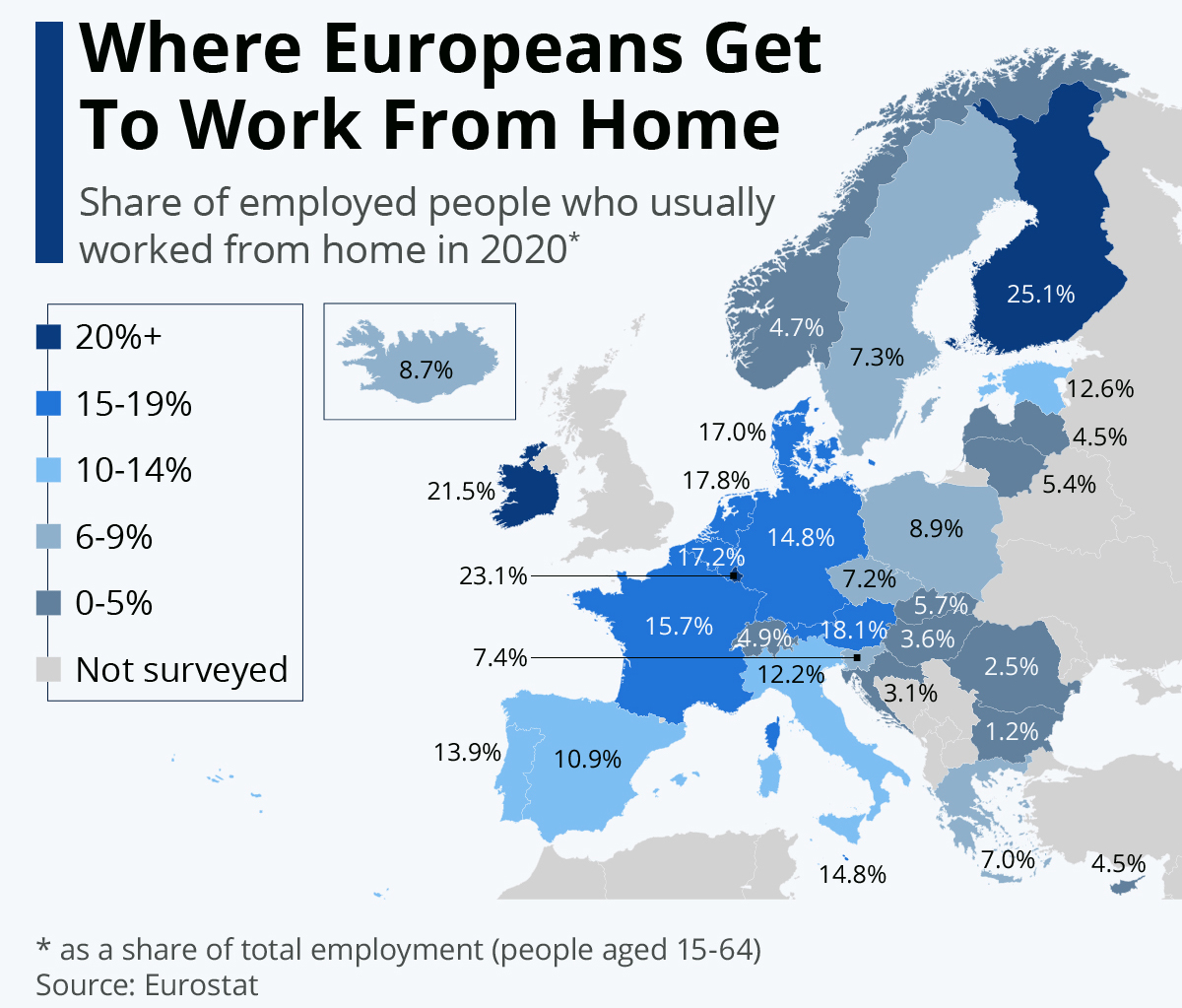
The geographical impact of the COVID-19 crisis has been uneven and may widen regional inequalities. Job losses were five times greater in rural areas than in cities. The Mediterranean regions were the most affected by job losses, also linked to tourism.
The pandemic highlighted long-standing gender inequalities. Women experienced a steeper fall in working hours than men, and young women have been more likely to lose their job than men.
The main Covid-hit sectors (e.g., childcare, retail, hospitality and tourism) and part-time jobs are characterised by high female employment, and women had to take much more time off to care for children and relatives than men.
Generational inequalities are mentioned by the youth. They feel “left out” from the political and social-welfare support (e.g., students are excluded from European welfare models), despite of their educational and occupational difficulties.
For millennials (now age 27-41) this is the second recession experienced after the 2008 Global Financial Crisis. For Gen Z (age 12-26) COVID-19 is THEIR crisis, for they face the biggest educational disruption(1) and a surge in unemployment.
Lack of physical learning opportunities and economic distress (e.g., the loss of student jobs) are increasing the risk of disengagement and dropout from education and training. Also, they see many problems to solve in the future, including global warming.
This strong sense of injustice and insecurity has either politicized them or left deep psychological scars. A research shows that 64% of young Europeans are at risk of depression, up from 15% before the Covid crisis.
Feeling alienated, the youth across Europe want to create more caring societies in the future, a study(2) shows. Fatigue with apps or SNS and a longing for “genuine” human interactions indicate the rising awareness for more human societies.
Also, COVID may let the society rethink to prioritize ‘human lives’ over economic competitiveness. Over 90 million people and almost 20 million children at risk of poverty or social exclusion in the EU. Despite being employed, nine million workers remain in poverty because of expanded nonstandard forms of employment and low wages.
On the other hand, protests against Corona vaccination have grown to anti-system movements and endanger the indispensable solidarity to tackle the crisis.
People’s value changes by Covid impact will affect consumer behaviours as well. The younger generations, for example, would spend less due to financial uncertainties. They would purchase less products but the best available services for the same amount of money. SUBSCRIPTION could become the major form of consumption.
Also, more politicized and eco-conscious consumers as well as politics in Europe would demand ever stronger CSR from large companies like Toyota, for they cannot tackle all those problems of climate changes, covid aftermath, immigration and the social disruption caused by the crises. In the next issues, these hypotheses for subscription and CSR will be discussed.
______________
Notes
(1) An OECD study shows that a lost school year can lead to a loss of up to 10% of lifetime income.
(2) A survey by The Guardian on 16-25-year-olds from 30 countries in Europe, 2021
_______________