
There are key factors mainly affecting a nation’s sustainability performance, such as environmental policy frameworks, green technology and innovation, and public engagement and behaviours. Several surveys help measure these factors by country, such as climate change awareness surveys, consumer attitudes statistics, and the Environmental Performance Index (EPI), in which Europe dominates all top 20.
Europe has advanced policy-driven, systemic approach to sustainability, such as ‘Circular Economy Action Plan’, and that fosters public engagement and strong sense of individual and societal responsibility. Most Europeans support consumption and waste reduction, recycling, and are ready to pay extra for sustainable products. Besides Japan, Germany is a leading nation in green technologies and advanced waste management systems. Economic concerns, however, are also high, and many associate the transition to renewable energy with higher household costs (especially in Germany).
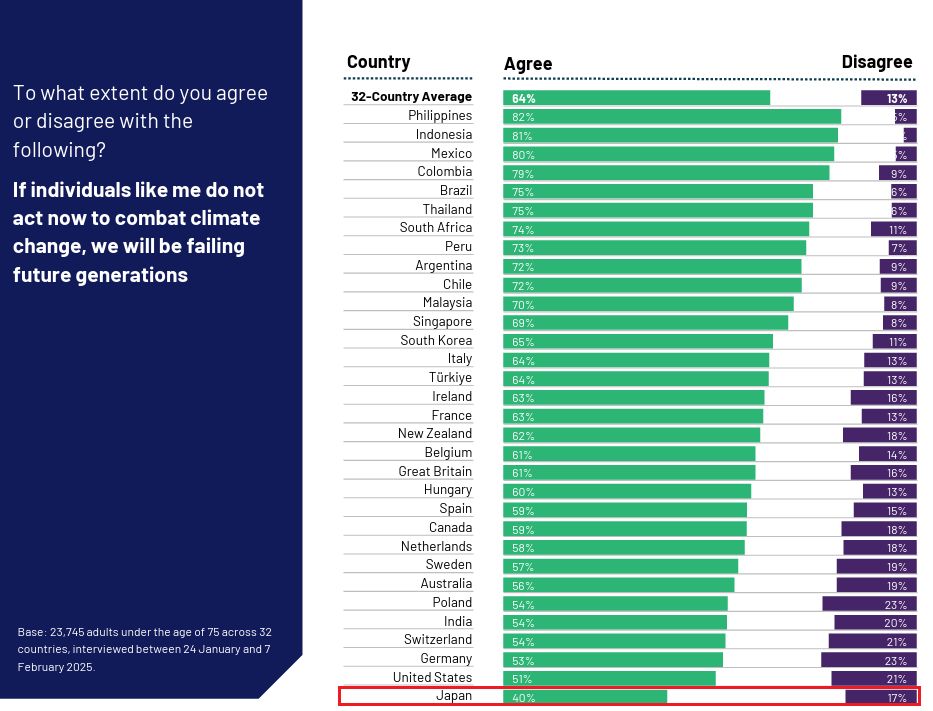
In Japan, advanced green technologies, political frameworks and industrial commitment exist, but public engagement and sense of individual responsibility are very low. Japanese have the lowest level of awareness of climate change, and the lowest percentage of consumers have adopted a sustainable lifestyle. Social norms impact environmental behaviour, and people are influenced by perceived expectations from others, and not individual convictions. Also, technological development, material prosperity, and energy security are still prioritized often at the expense of environmental concerns. In Europe and the US, younger and better educated people tend to be more sustainability conscious, but Japanese youth are the least concerned about environmental issues.
In the US, the majority concerns the climate change (and natural disasters) and support policies for environmental protections for future generations. At the same time, economic concerns, like keeping costs low and boosting growth, are also high, and American consumers are least willing to reduce consumption. Sustainability attitudes, however, is deeply polarized with political lines: Democrats emphasis more on environmental protection, while Republicans focus on cost control and economic growth.
Impacts of Trump’s return and populism
Recent surveys reveal that over half of Americans oppose Trump’s clean energy rollbacks and the Paris Agreement exit, and even Republicans support funding more research into renewable energy sources. Over the years, however, concern about climate change has decreased also among Democrats, and petrol and gas have become more favourable.
The surge of populist and right-wing parties in the US and Europe tends to erode support for climate action, especially measures involving new taxes or regulations perceived as economically harmful. These tendencies could diminish sustainability consciousness in the US and Europe.
欧州との比較で見る、日本と米国のサステナブル意識
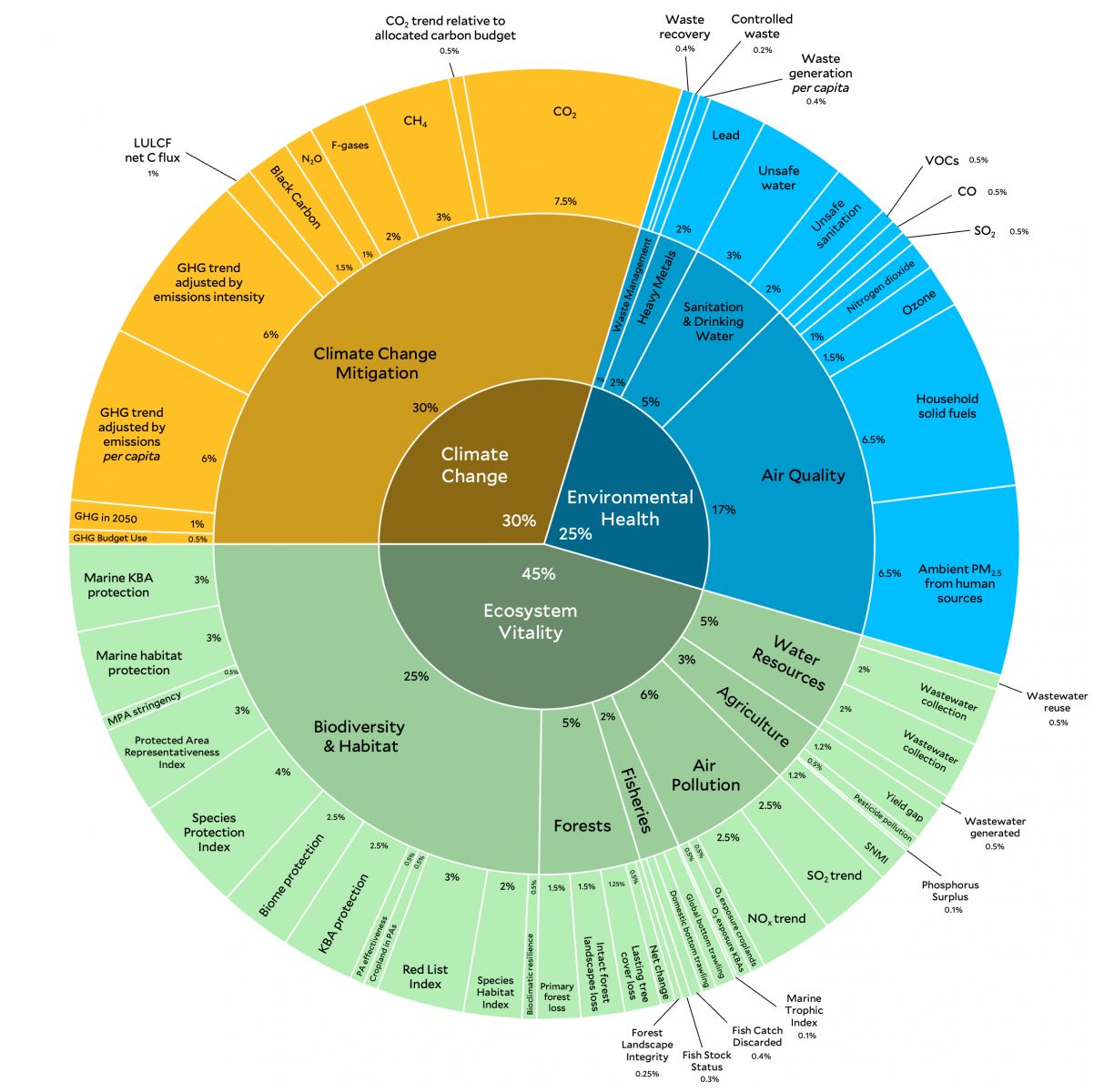
国家の持続可能性パフォーマンスに影響を与える要因として、環境政策、グリーンイノベーションと環境技術、国民の行動と取り組みなどが挙げられる。これらの要因を国別に測定し比較するには、気候変動意識調査、消費者態度統計、環境パフォーマンス指数(EPI)などが指標となる。EPIでは欧州が上位20位を独占している。
欧州は「循環型経済行動計画」に見られるように、政策主導の体系的アプローチで持続可能性を推進しており、これが個人・社会レベルの強い責任感と市民参加を育んでいる。ほとんどの欧州人が消費と廃棄物の削減やリサイクルを支持しており、サステイナブルな製品には追加コストを厭わない。また、ドイツ(及び日本) はグリーン技術と先進的廃棄物管理システムで世界をリードしている。しかし経済的な懸念も強く、再生可能エネルギーへの移行を家計負担と結びつける見方も多い(特にドイツ)。
日本には先進技術、政治的枠組み、産業界の取り組みは在るものの、持続可能性への国民の関与と個人の責任意識は非常に低い。国際比較で日本人は気候変動問題に関する認識が最も低く、サステイナブルなライフスタイルを取り入れている消費者の割合も最低であった。日本では社会的規範が人々の環境に対する行動に強く影響し、個人の信念からではなく、周囲が自分に期待していると思われる行動を取る傾向が強い。また、技術開発、物質的繁栄、エネルギー安全保障が依然として優先され、環境問題はしばしばその犠牲となり易い。欧米では若年層や高学歴層ほどサステイナブル意識が高い傾向にあるが、日本の若者は環境問題への関心が最も低い。
米国では、大多数が気候変動(および自然災害)を懸念し、次世代のための環境保護政策を支持している。しかしコスト抑制や成長促進といった経済的懸念も強く、消費削減に最も消極的なのも米国人だ。もっとも、サステイナビリティへの姿勢は支持政党により大きく分かれる:民主党派が環境保護を重視する一方で、共和党派はコスト管理と経済成長を優先している。
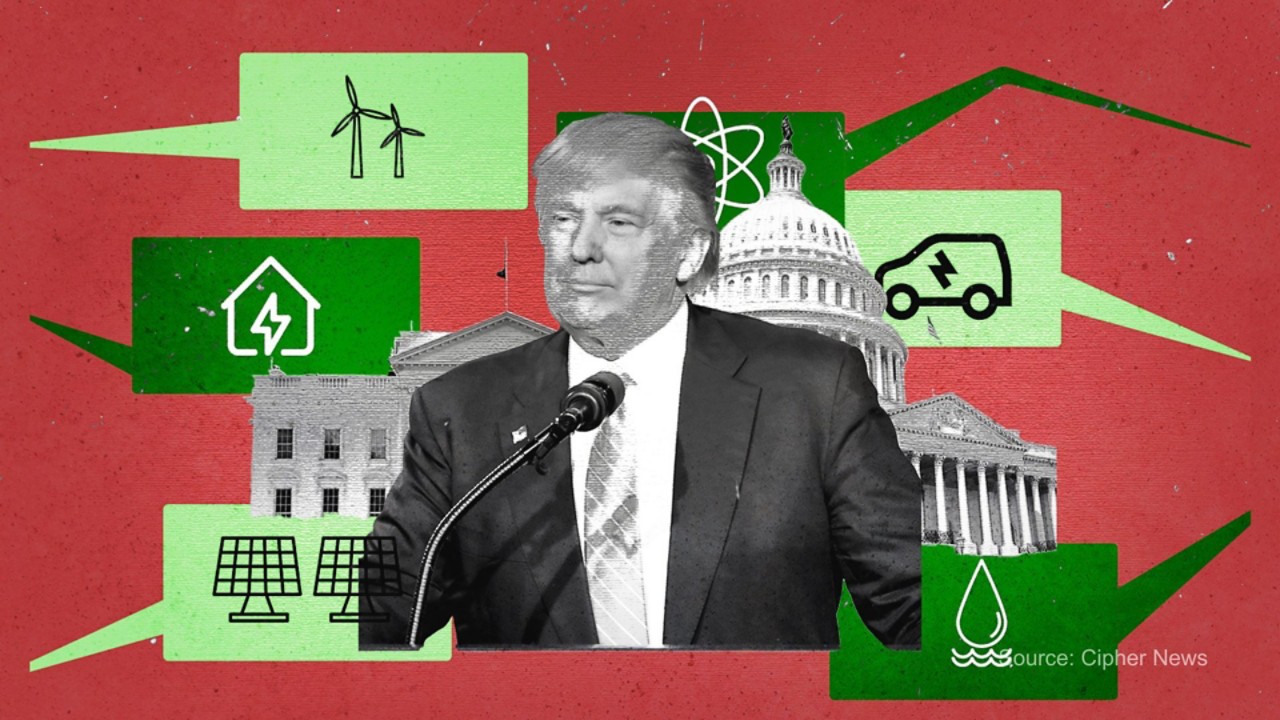
トランプの復帰とポピュリズムの影響
最近の調査によると、米国人の半数以上がトランプ政権のクリーンエネルギー政策の後退とパリ協定離脱に反対しており、共和党派でさえ再生可能エネルギーへの研究資金の増額を支持している。しかしここ数年で民主党派の間でも気候変動への懸念が低下し、石油・ガス産業への支持が高まっている。
また、欧米での右派・ポピュリスト政党の台頭は、気候変動対策への支持を弱める傾向にある。特に新たな課税や規制など、国民の経済的負担を伴う措置に対してその傾向が顕著だ。これらの動きが、欧米におけるサステナブル意識の低下を引き起こす恐れもある。